Skip to content

About Us

592767211 122142413888898140 5013071974213221345 n

TOP RATED SEPTIC SERVICES
About E&J Residential

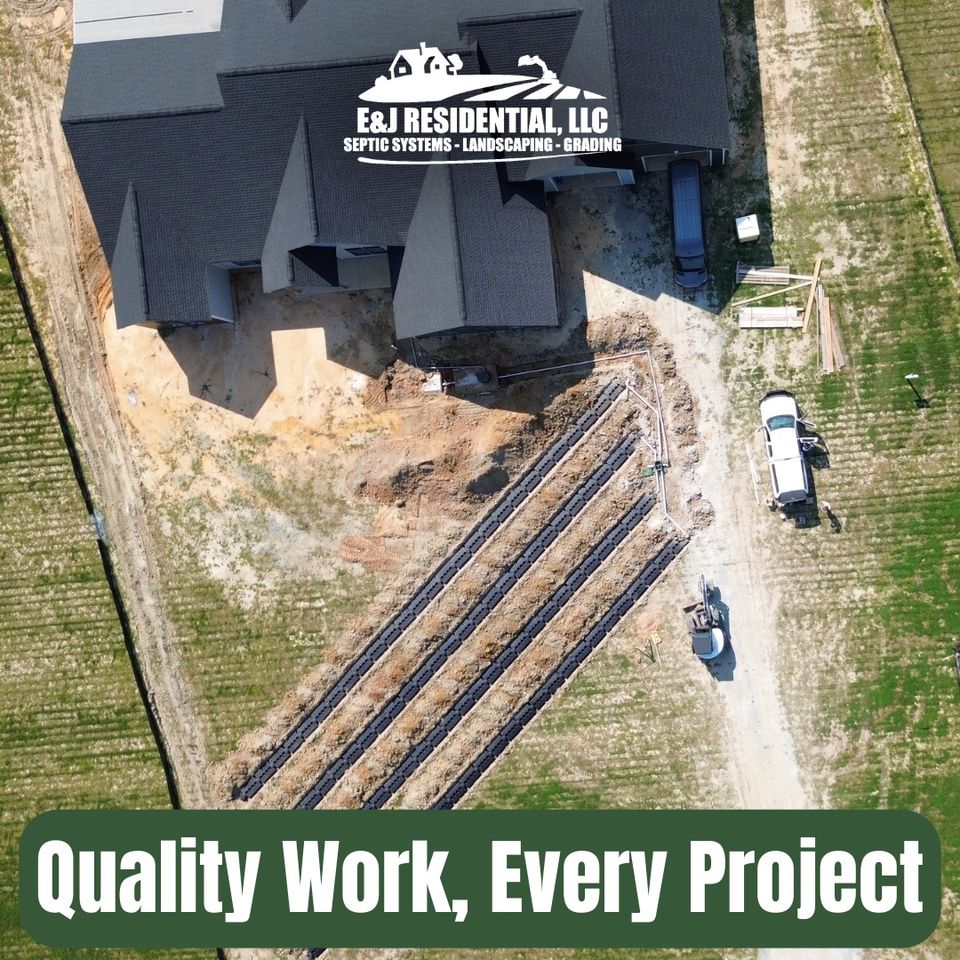
At E&J Residential, we proudly serve Eastern & Central, NC with dependable septic system services built on honesty, quality workmanship, and years of hands-on experience. We specialize in new construction septic system installations, working closely with homeowners, builders, and contractors to ensure every system is installed correctly, efficiently, and up to code. From site preparation to final installation, our team is committed to providing reliable service and long-lasting septic solutions for residential properties of all sizes.

In addition to new installs, E&J Residential also provides septic repairs for existing systems. Whether you’re dealing with drainage issues, damaged lines, system failures, or general septic concerns, we work quickly to diagnose the problem and provide effective, affordable repairs. We understand how important a properly functioning septic system is to your home and daily life, which is why we take pride in delivering responsive service and dependable results throughout Eastern & Central, NC.
Contact Us

QUESTIONS & ANSWERS
Frequently Asked Questions


Does homeowner's insurance cover repair or service?  
This will ultimately depend on the insurance company. Unfortunately, most insurances do not cover sewer repairs or septic tank pumping. Although a sewer backup or leak can happen in an instant, it’s often the result of natural wear and tear that took many years to happen.


How often should my septic tank be pumped?
According to the United States EPA, The average household septic system should be inspected at least every three years by a septic service professional. Household septic tanks are typically pumped every three to five years. Alternative systems with electrical float switches, pumps, or mechanical components should be inspected more often, generally once a year. A service contract is important since alternative systems have mechanized parts.

Also keep in mind that every septic system is different. The suggested frequency of septic pumping will be determined by multiple factors such as household size, septic tank size, and the volume of solids in wastewater.


How many years can I expect my septic system to last?
Assuming that your system is properly installed and maintained, it should last you about 15 - 40 years or more. However, if you neglect proper maintenance, then the life of your system would decrease.
 

I’m building a new home in Eastern NC. When should I start the septic planning process?
Ideally before you finalize your home's exact footprint. In North Carolina, you must obtain an Improvement Permit (IP) and a Construction Authorization (CA) from your local county health department before any building permits can be issued. Starting early ensures your soil can support the size of the home you want to build and prevents costly delays in your construction schedule.
 

How does Eastern NC’s soil and high water table affect my new septic system?
Our coastal and coastal plain geology means soil types vary wildly. From heavy, poorly draining clay to deep, rapid-draining sand. Additionally, many areas have high seasonal water tables. Because of this, a standard conventional gravel system isn't always an option. Depending on your specific lot's soil report, you may need an alternative system, such as a low-pressure pipe (LPP) system, a pump system, or an engineered mound system to meet state environmental protections.
 

What is the difference between a conventional septic system and an alternative system?
Conventional Systems: These rely on gravity to move wastewater from the tank into gravel-filled trenches where the soil naturally filters it. They require deep, well-draining soil.

Alternative Systems: Used when a lot has poor soil, a high water table, or restrictive space. These systems use pumps, advanced treatment units, or shallow placement to safely treat wastewater before it hits the water table. We analyze your county soil evaluation to determine the most cost-effective, reliable option for your lot.

Can I drive or build over my septic tank or drainfield once installation is complete?
Absolutely not. This is one of the most common causes of system failure. The weight of vehicles, heavy equipment, decks, pools, or storage sheds will crush the PVC lines, crack the septic tank, and compact the soil destroying its ability to absorb and filter wastewater. The area over your system should only ever host regular foot traffic and lawnmowers.
 

Need FAST Emergency Service?

We've got you covered!
CALL NOW: 919-796-4600
Contact Us